- Description: What happened? Keep it brief and factual. Maintain patient confidentiality (NMC Code).
- Feelings: What were your reactions? Acknowledge emotional impact on clinical reasoning.
- Evaluation: What was good or bad about the experience? Look at the situation objectively.
- Analysis: Make sense of the situation using academic literature and clinical guidelines (e.g., NICE guidelines).
- Conclusion: What else could you have done? Summarize lessons learned.
- Action Plan: If it arose again, what would you do differently? Must be SMART (Specific, Measurable, Achievable, Realistic, Time-bound).
Gibbs Reflective Cycle Nursing Assignment: The 70%+ Distinction Blueprint
Reflective practice is the cornerstone of modern nursing in the UK. While various frameworks exist, the Gibbs Reflective Cycle (1988) remains the industry standard for bridging the gap between clinical experience and professional development.
Prioritise People
Addressed in 'Feelings' and 'Evaluation' stages.
Practice Effectively
The core focus of 'Analysis' and 'Conclusion'.
Preserve Safety
Critical in 'Evaluation' and 'Action Plan'.
Promote Professionalism
The synthesis of the entire reflective cycle.
1. The Visual Cycle
Before diving into the academic writing, it is vital to understand the cyclical nature of Gibbs. It is not a linear checklist; it is an iterative loop designed for continuous professional development.
2. Description & Feelings (The "Brief" Zone)
The most common mistake nursing students make is dedicating half their word count to the "Description." Keep it to 10-15% of your total word count. The examiner does not need a novel; they need context.
When discussing Feelings, move beyond "I was sad." Use professional emotional intelligence. Did your anxiety stem from a lack of protocol familiarity? Did your empathy compromise your clinical objectivity? Acknowledge how the emotion influenced the clinical outcome.
3. Interactive Gibbs Cycle Builder
If you are staring at a blank page, use our interactive builder below. Input the basic facts of your clinical scenario, and it will generate a structurally sound framework for your assignment. This is the exact framework our Nursing Assignment Experts use when drafting First-Class models.
Gibbs Reflective Framework Generator
Input your clinical variables to instantly build your 6-stage reflection structure.
Generated Reflection Framework
4. Evaluation: The MDT Focus
Evaluation is where you step back. What was good? What was bad? A strong reflection looks at the situation from multiple perspectives, particularly the Multi-Disciplinary Team (MDT) and the patient's family.
Did communication break down between the nurses and the doctors? Was the handover (SBAR) ineffective? Highlighting systemic issues rather than just personal failings shows maturity and systems-level thinking.
5. Analysis: The Distinction Zone (40% of Marks)
This is where the bulk of your marks lie (up to 40%). You must link your clinical experience to academic literature. A 2:2 student says, "Communication was poor." A 1st Class student says, "The breakdown in communication exemplifies the findings of Smith et al. (2022), who argue that high-stress ward environments degrade SBAR handover efficacy."
- Use NICE Guidelines to justify clinical decisions.
- Reference the NMC Code (2018) to justify professional and ethical decisions.
- Use current, peer-reviewed nursing journals (e.g., Nursing Times, British Journal of Nursing) to support your claims. Need help with formatting these sources? Use our citation audit tool.
6. Conclusion & Action Plans
Your conclusion should not introduce new material. It should summarize the core lessons learned. Finally, your Action Plan must be SMART (Specific, Measurable, Achievable, Relevant, Time-bound).
1st Class Action Plan: "Within the next month, I will complete the Trust's advanced IV medication administration module and request supervised practice from my mentor for my next three IV administrations to ensure total compliance with NMC medicines management standards."
Struggling with Your Clinical Reflection?
Don't let a poorly structured reflection jeopardize your nursing placement or degree. Our active NHS practitioners and clinical educators can help you map your experience perfectly to the NMC Code and Gibbs Cycle.
Get Nursing Assignment Help100% Confidential. Zero AI. Written by Verified Clinical Academics.
1. The Visual Cycle: Mapping the Framework
To use the Gibbs Cycle effectively, you must treat it as a continuous loop of clinical improvement. It is designed to take you from the raw data of a clinical incident to a concrete action plan for future practice.
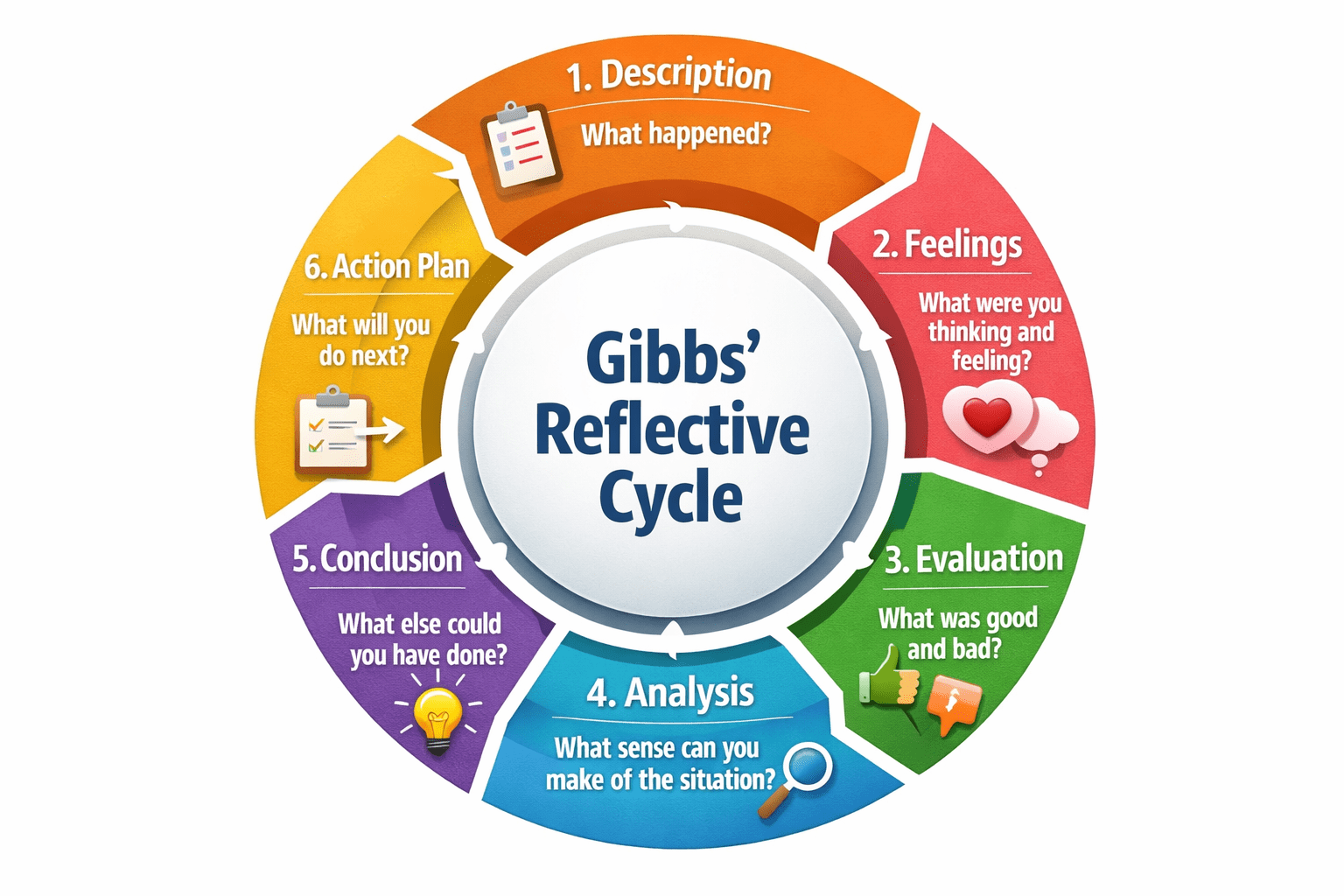 Figure 1: The 6-Stage Gibbs Reflective Cycle (1988)
2. Stage 1 & 2: Setting the Clinical Context
1 Stage 1: Description (The 10% Rule)
The most frequent error in nursing assignments is providing a narrative that is too long. In a 2,000-word reflection, your Description should occupy no more than 200 words. Focus strictly on the clinical facts: What happened? Who was present? What was the immediate outcome?
2 Stage 2: Feelings (Emotional Intelligence)
Nursing is a "high-affect" profession. Stage 2 requires you to explore your emotional state during the incident. However, to reach a Distinction, you must analyze how these feelings impacted your clinical reasoning.
A common way to elevate this section is by incorporating Hildegard Peplau's Theory of Interpersonal Relations. Understanding the phases of the nurse-patient relationship allows you to explain why you felt a certain way during the orientation or identification phase.
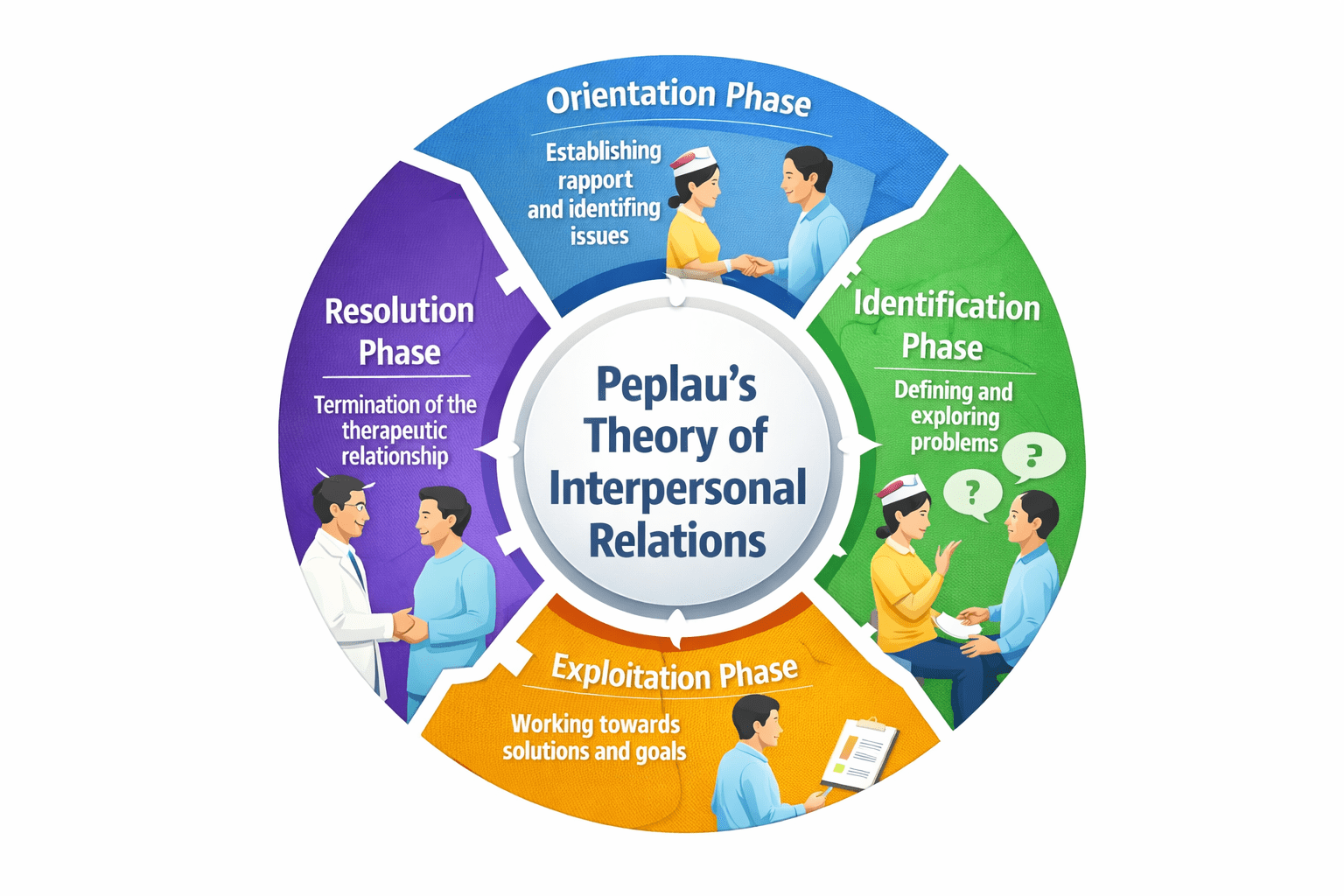 Figure 2: Peplau's Phases of the Nurse-Patient Relationship
By anchoring your feelings in established nursing theory like Peplau’s, you move away from subjective "diary-style" writing and toward the academic objectivity required for 1st Class Honours.
3. Stage 3: Evaluation (Objective Clinical Impact)
In the Evaluation stage, you must look objectively at the clinical event. It is not about your feelings; it is about the efficacy of the care pathway. What went well? What was problematic?
🤝 The MDT Perspective
To achieve a Distinction, you must evaluate the experience from the perspective of the Multi-Disciplinary Team (MDT). How did your intervention affect the ward's flow? Did you effectively utilize the Pharmacist or Physiotherapist? Acknowledging the MDT shows the examiner that you understand the "Practice Effectively" domain of the NMC Code.
4. Stage 4: Analysis (The Distinction Zone)
This is where the 70% grade is won or lost. Analysis is the process of making sense of the event by linking your clinical observations to Theory and Evidence-Based Practice (EBP).
| Standard "Pass" Analysis | Academic Distinction (70%+) Analysis |
|---|---|
| "I maintained the patient's dignity during the procedure. This made them feel comfortable and is part of being a good nurse." | "By implementing a person-centred approach, I upheld NMC Code (2018) Standard 1.1. However, applying Kitwood’s Theory of Personhood, I noted that environmental stressors inhibited the patient's 'social confidence,' suggesting a need for..." |
| "Communication was difficult because the patient was in pain, so I made sure to explain things slowly." | "The orientation phase of Peplau’s Theory of Interpersonal Relations was compromised by the patient’s acute physiological distress. According to research by Thompson (2024), pain significantly alters cognitive processing in emergency settings, necessitating the use of..." |
Beyond Description: Critical Appraisal
To hit the highest marks, don't just quote an author—critically appraise them. Does the theory actually work in a busy NHS ward? If Peplau's model (Orientation, Identification, Exploitation, Resolution) was difficult to follow due to time constraints, say so. Markers love it when students challenge theory with real-world clinical reality.
By referencing the Peplau’s Theory we discussed in the previous section, you prove that your clinical actions are guided by high-level psychological frameworks rather than just "gut instinct."
5. Stage 5: Conclusion (Professional Synthesis)
The Conclusion is where you synthesize your analysis into a refined clinical perspective. It is not a summary of the events, but a summary of your learning. Ask yourself: "In hindsight, what specific clinical skill or theoretical concept was the missing link?"
A Distinction-grade conclusion must acknowledge the complexity of clinical environments. For example, if you are writing about a patient fall, your conclusion should discuss the tension between patient autonomy and the duty to preserve safety (NMC Domain 3).
6. Stage 6: Action Plan (The Professional Loop)
Without an Action Plan, a reflection is merely an observation. To secure a First-Class grade, your action plan must be SMART (Specific, Measurable, Achievable, Relevant, and Time-bound). This proves to the NMC—and your marker—that you are committed to Continuous Professional Development (CPD).
Clinical Competency
I will enroll in a Trust-certified IV medication safety workshop within the next 30 days to address the technical knowledge gap identified in my analysis.
Peer Shadowing
I will arrange a 1-on-1 session with the Senior Tissue Viability Nurse to observe advanced pressure ulcer grading before the end of my current placement.
Evidence Review
I will conduct a systematic search via the RCN Library to identify 2025 updates on sepsis screening tools to ensure my practice remains evidence-based.
A Final Note on NMC Revalidation
Remember that these academic reflections form the foundation of your NMC Revalidation Portfolio. Mastering the Gibbs Cycle now ensures you are prepared for a career as a critically aware, high-performing registered nurse.
For further support on advanced nursing scholarship, explore our professional resources: